By Kayla Phan
Chief Financial and Print Officer
After reading Andy Weir’s science fiction novel of the same name, “Project Hail Mary” became one of my most anticipated movies of 2026. The film proves that an original, science-driven story can still draw a massive audience while also centering around themes of friendship and trust.
The movie follows Ryland Grace (Ryan Gosling) as a middle school science teacher and former molecular biologist. He wakes up from a coma to find himself stranded on an interstellar spacecraft, realizing he is Earth’s last hope in saving their dying sun, a “Hail Mary” for humanity.
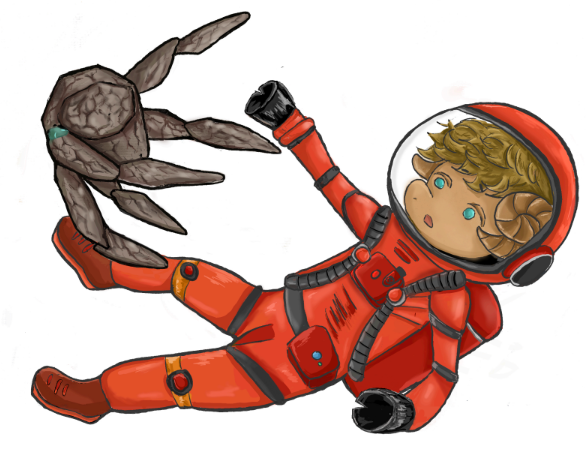
During his journey, Grace discovers another spacecraft with a similar mission of saving their planet, and befriends a spider-like alien he dubs Rocky (James Orwitz).
What really drives the film is the friendship between Grace and Rocky. They both were alone on their spaceship, two lonely souls lost in the great expanse of space. Despite coming from completely planets that are light-years apart, Grace and Rocky managed to build trust and friendship while carrying the weight of their entire civilizations on their shoulders
Their connection reminded me of my own experiences—friendships between two people who seem to have nothing in common at first. Over the years, I’ve met many people who felt like total opposites from me, yet they became my closest friends.
These relationships grew through time spent together and with small discoveries along the way. Suddenly, you can find that you’re more alike than you ever expected.
Grace and Rocky embody this by constantly meeting each other halfway. Because of their patience and understanding, their friendship felt genuine and earned.
Watching them bridge the gap between two different species and languages illustrates how shared goals can overcome any barrier.
However, the character writing didn’t always hit the mark, and Grace in the movie felt like a step backward from the source material. While the book portrays him as methodical and precise, surviving on intellect rather than luck, the movie softens that edge and leans into Gosling’s natural charisma.
While it makes Grace feel more relatable, it also takes away the sense that he’s capable of solving incredibly complex problems on his own.
Even so, the heart of the story is still intact. The sense of hope, collaboration and urgency are still there. Whatever the film adjusts on the surface, it never loses sight of what makes the story meaningful in the first place.
I would definitely recommend watching “Project Hail Mary,” whether you’ve read the book or not. It’s emotionally engaging and manages to pull you in from start to finish.