ILLUSTRATION/ Ella Chang
By Leyna Phan
Staff Writer
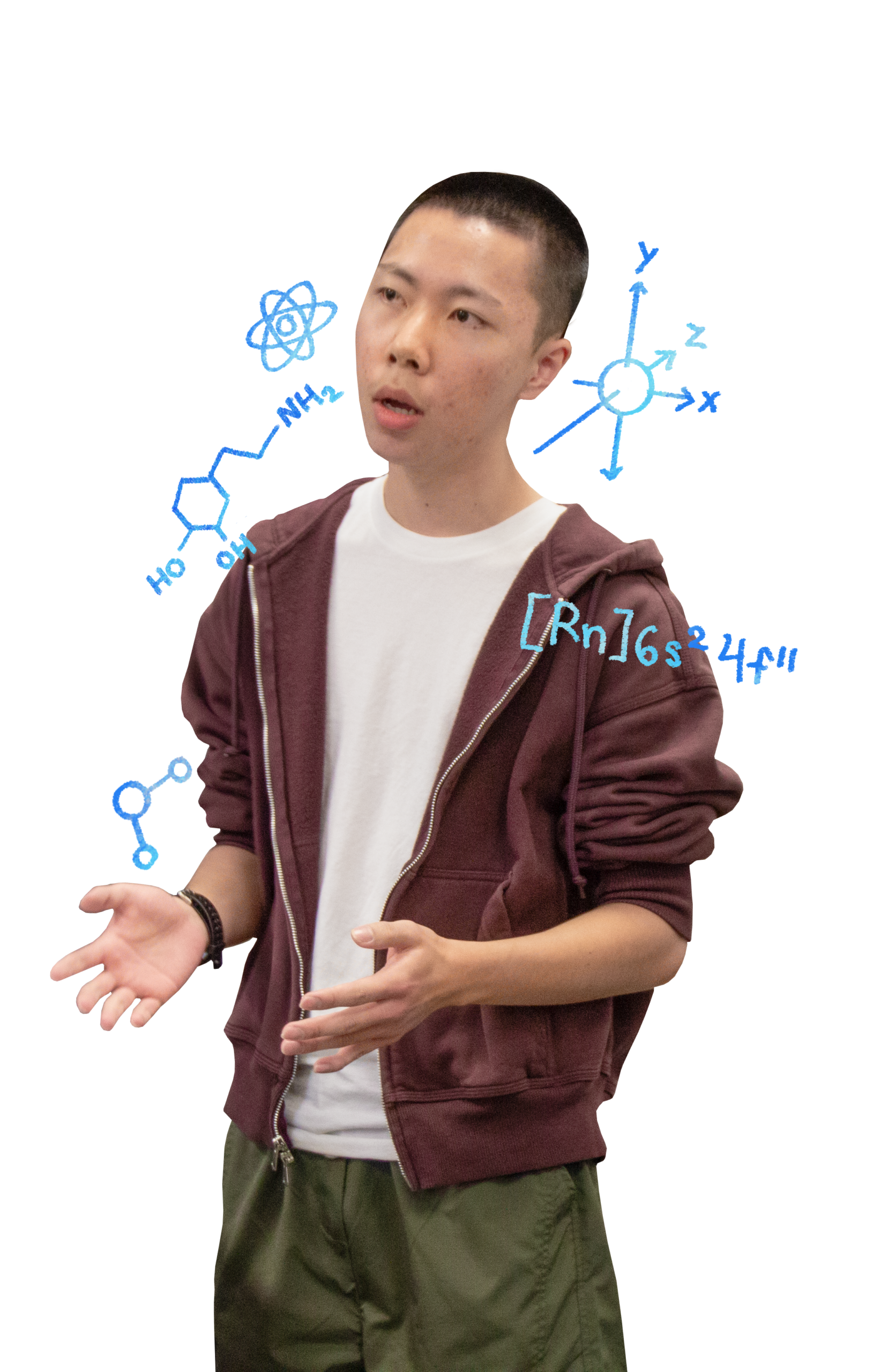
The evening light ripples across the Charles River as senior Song Guo watches the sunset outside the New House dorms. Inside waits a stack of chemistry problem sets from another day of demanding lectures. Gold shifts to violet as Guo heads back in, determined to face any challenge throughout his six weeks at MITES.
Guo is one of 65 students nationwide to attend the MIT Introduction to Technology, Engineering and Science program. The on-campus summer institute immerses rising seniors in college-level coursework, free of charge. Guo found the program while researching summer opportunities online in December of his junior year. He was drawn to its mission of opening doors for underprivileged students in STEM by providing educational opportunities and mentorship.
“I think, to some extent, my story aligns with their values, and that’s what made me decide to apply,” Guo said. “I knew there was a chance, but my hopes weren’t very high. But I had some confidence in my essays, especially my long essay.”
MITES splits its curriculum into five courses. Guo’s schedule included linear algebra, an electromagnetic course with multivariable calculus, biochemistry, humanities and a genomics elective. The program ran from June 20 to July 31. “I thought the campus would be all futuristic, but it’s really just a long strip of old, normal buildings,” Guo said. “Our dorms were situated in the furthest corner of the campus, so the walk to classes was quite big.”
A typical day for Guo ran close to 13 hours: up at 7:30 a.m. for breakfast, classes from 9 a.m. through a one-hour lunch, more classes until a 6 p.m. dinner, then office hours that were optional but instrumental. “If you don’t attend office hours, you’re kind of doomed, because the classes are really hard and you need that time to do your homework, which we called problem sets,” Guo said. “It’s like you have to pick two out of three: socialize, sleep or study. I chose not to socialize, not until the last two weeks.”
Before MITES, a military academy or Reserve Officers’ Training Corps sat at the top of Guo’s post-graduation plans. Six weeks around MIT undergraduates, graduate students and researchers led him to refocus on academia and higher education.
“He’s so well-rounded,” physics teacher Kevin Slattery said. “Part of admission is luck, but another is that he sets himself up for success. He’s everything that they would want in a student, academically, socially and motivationally.”
Guo’s advice for future applicants is to show passion and initiative instead of just focusing on good grades. He didn’t fully live by this advice himself until this summer. “My father tells me a lot to work hard and play hard,” Guo said. “I don’t think I understood what it meant until I got to MITES, a place where I actually had to do both.”